
An emergency fund is money set aside for surprises like a car repair, a vet bill or time between jobs. A common target is three to six months of essential expenses. Start with a smaller first goal, keep it in a separate account and top it up automatically each payday.
What counts as an emergency?
An emergency is unexpected, necessary and urgent. The car breaks down and you need it for work. A tooth cracks. The vet says it cannot wait. You lose your job or your hours are cut.
Christmas, a holiday or a sale are not emergencies, because you can see them coming. Those are better handled with a sinking fund, so your emergency money stays there for real surprises.
How much do you need?
Base it on your needs, not your total spending. In an emergency you would cut the wants, so you only need to cover rent, groceries, bills, transport and minimum repayments.
| Goal | Covers | If needs are $2,600 a month |
|---|---|---|
| First goal | One month of needs | $2,600 |
| Solid | Three months of needs | $7,800 |
| Extra safe | Six months of needs | $15,600 |
Example figures only.
Aim toward the higher end if your income is irregular, you are the only earner in your household or other people rely on you.
Where should you keep it?
- Separate from your everyday account, so it does not quietly get spent.
- Easy to reach within a day or so, because emergencies do not wait.
- Somewhere it earns interest, such as a savings account with an Australian bank.
- Not invested in shares, because their value can be down right when you need the money.
Deposits with Australian banks, building societies and credit unions are protected by the Australian Government's Financial Claims Scheme, up to $250,000 per person at each institution.
How to build it
- Automate it. Set a transfer for payday, even if it is small. $50 a fortnight is $1,300 in a year.
- Use windfalls. Put part of a tax refund, bonus or gift money straight in.
- Redirect a want. Cancel one subscription and send that amount to the fund instead.
Carrying a credit card balance? A common approach is to build a small first buffer, then focus on paying down the debt before growing the fund further.
Using it, then refilling it
When a real emergency happens, use the fund. That is what it is for, and it is much cheaper than a credit card or a loan. Afterwards, pause other savings goals for a little while and top it back up.
Find the money to build it
Cleer shows what you spend on wants each week, fortnight or month, and what cutting them by 20% would free up over a year. That can be your emergency fund.
Download free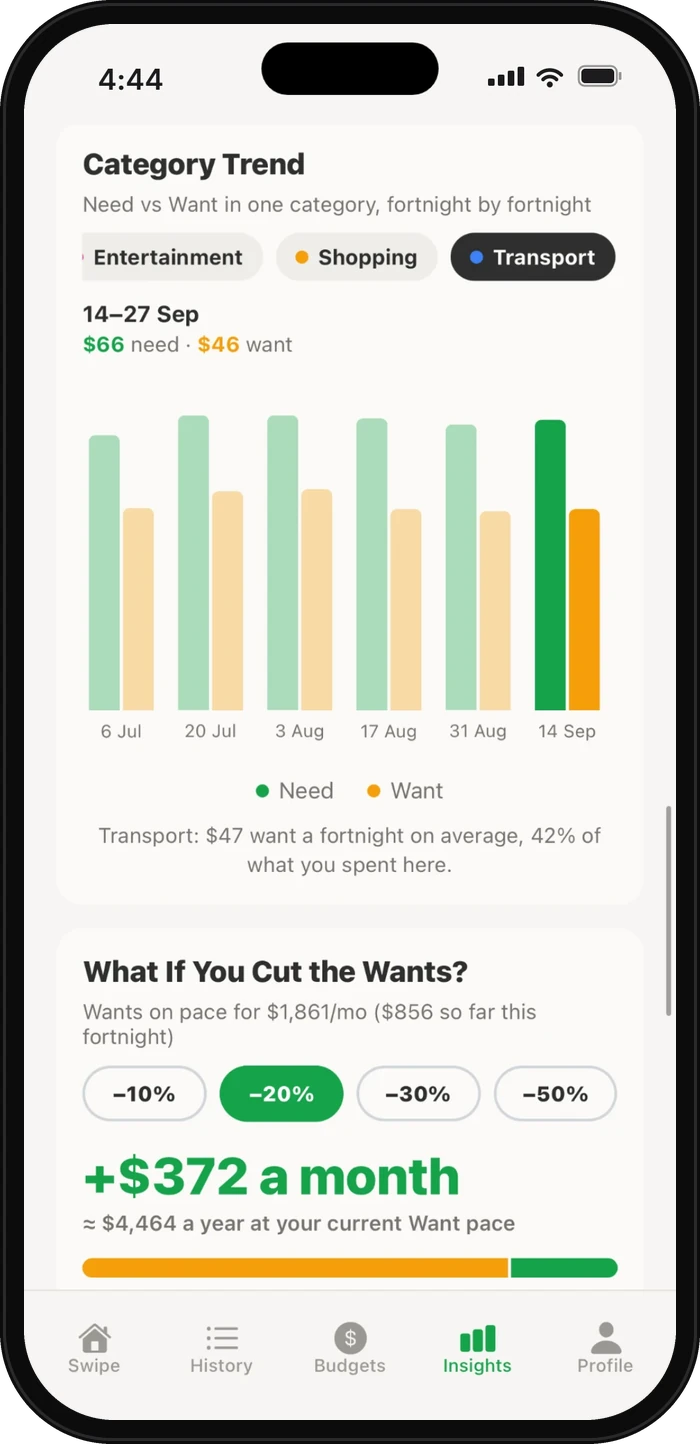
Your emergency fund in five points
- Emergencies are unexpected, necessary and urgent.
- Aim for three to six months of needs, starting with one.
- Keep it separate, easy to reach and earning interest.
- Automate a small transfer every payday.
- Use it when you need to, then refill it.
Keep reading
General information only. This guide does not take your personal situation into account and is not financial advice. For free, independent help, visit Moneysmart or call the National Debt Helpline on 1800 007 007.