
The 50/30/20 rule splits your take-home pay three ways: 50% for needs, 30% for wants and 20% for savings and extra debt repayments. It is a simple starting point, not a law. If your rent is high, bend it to fit.
Where does the rule come from?
The split was popularised by Elizabeth Warren and Amelia Warren Tyagi in their 2005 book All Your Worth. Its appeal is that you only track three numbers instead of dozens of categories.
What goes in each bucket?
- Needs (50%): rent or mortgage, groceries, power, transport, insurance, phone and minimum debt repayments.
- Wants (30%): eating out, streaming, clothes, hobbies, holidays and anything else you could pause.
- Savings (20%): an emergency fund, savings goals and any repayments above the minimum.
The rule uses take-home pay, after tax. Your employer's super contributions are paid on top of your wage, so they are not part of the 20%.
Not sure which bucket something belongs in? Our needs vs wants guide covers the grey areas.
What it looks like on an Australian pay
Here is the split for an example take-home pay of $1,200 a week, shown per week, fortnight and month:
| Bucket | Per week | Per fortnight | Per month |
|---|---|---|---|
| Take-home pay | $1,200 | $2,400 | $5,200 |
| Needs (50%) | $600 | $1,200 | $2,600 |
| Wants (30%) | $360 | $720 | $1,560 |
| Savings (20%) | $240 | $480 | $1,040 |
Example figures only. A month here is 52 weeks divided by 12, which is why it is more than four weeks of pay.
Work out your own split
Enter your take-home pay and how often you are paid. Nothing you type leaves your browser.
- Needs (50%)
- Wants (30%)
- Savings (20%)
That is saved over a year.
When should you bend it?
The rule was never meant to fit everyone. Some common reasons to adjust it:
- High rent. In a big city, needs can easily pass 50%. A 60/20/20 or 70/20/10 split is still a plan.
- Paying off debt. If you are clearing a credit card or personal loan, you might move some of your wants into the 20% for a while.
- Saving for something big. A house deposit or a wedding might mean a bigger savings slice for a set time.
- Irregular income. If your pay changes week to week, base the split on a lower, typical pay and save anything above it.
What matters is that the numbers add up to your pay and that you pick them on purpose.
How to try it this week
Write down your take-home pay. Add up last month's needs from your bank statement and work out what percentage of your pay they took. Do the same for savings. Whatever is left went on wants. Compare your real split with 50/30/20, then pick one small change to move toward the split you want.
See your real split in Cleer
Cleer sorts your spending into wants and needs and shows the split for each week, fortnight or month. Set budgets that match your pay cycle and see where you are heading before payday.
Download free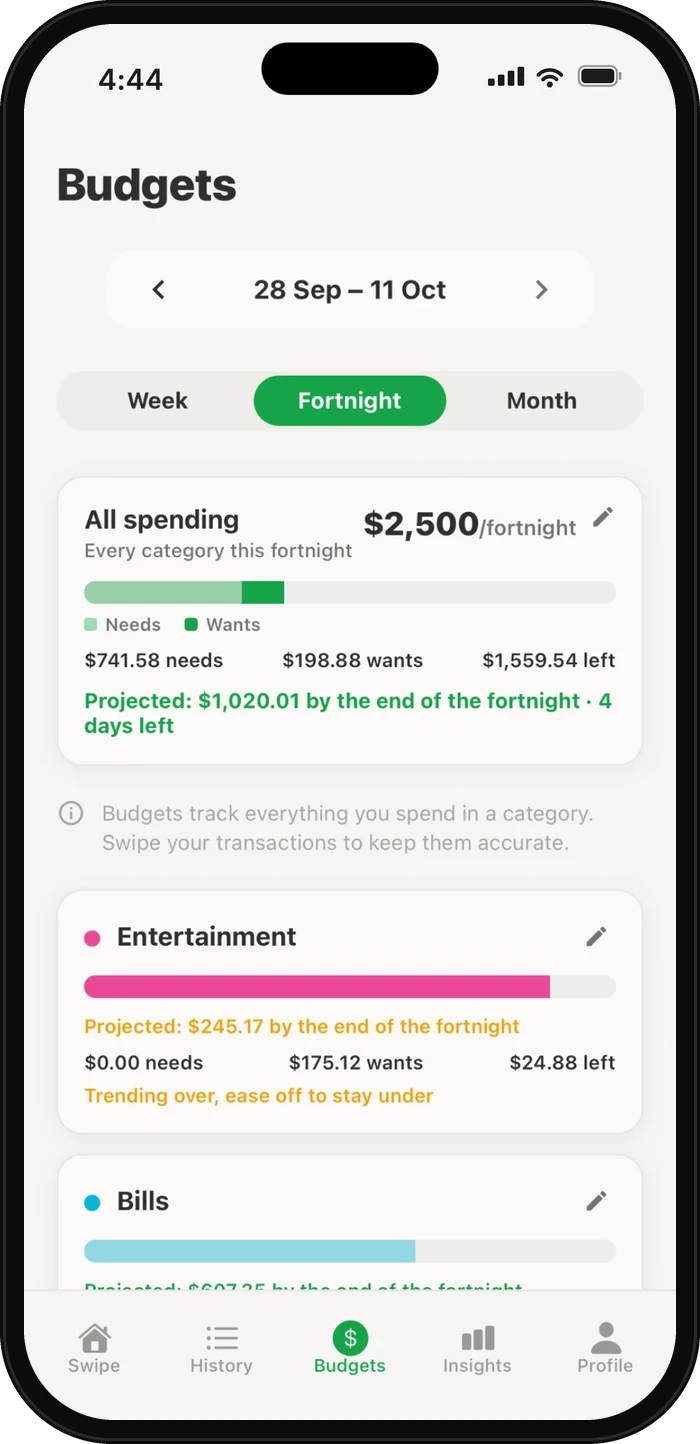
The 50/30/20 rule in five points
- Split take-home pay into needs, wants and savings.
- Minimum repayments are needs. Extra repayments are savings.
- Employer super is separate and does not count toward the 20%.
- High rent or debt is a reason to bend the split, not abandon it.
- Start with your real split, then move one step at a time.
Keep reading
General information only. This guide does not take your personal situation into account and is not financial advice. For free, independent help, visit Moneysmart or call the National Debt Helpline on 1800 007 007.