
Add up what Christmas will really cost, including food, travel and the little extras. Divide that by the paydays you have left and move that amount into a separate account each payday. That is called a sinking fund. Next year, start it in January and the amount per pay gets much smaller.
1Write down the whole of Christmas
Gifts are usually only part of the cost. Before you pick a number, list everything:
- Gifts: each person and roughly what you want to spend
- Food and drinks: Christmas Day, plus any gatherings you are hosting or bringing a plate to
- Travel: fuel, flights or accommodation to see family
- The extras: wrapping, cards, postage, decorations, Kris Kringle and work parties
January comes straight after. Back-to-school costs, insurance renewals and regular bills do not take a break, so keep them in mind when you set your Christmas number.
2Set the total, then fit the list to it
Decide what you can afford first, then trim the list until it fits, rather than adding up the list and hoping. If the total is more than you can save in time, a few ideas:
- Suggest a Kris Kringle for the adults in the family, so everyone buys one gift.
- Agree on a spending limit per person.
- Share the hosting, with everyone bringing part of the meal.
- Give time instead: a day out, a home-cooked dinner or help with a job.
3Divide it by your paydays left
Count the paydays between now and when you will do most of your spending. Divide your total by that number and you have your amount per pay. For example, $800 with three fortnightly pays to go is about $267 a pay.
Work out your Christmas savings
Enter your Christmas budget and how many paydays you have left. Nothing you type leaves your browser.
- Set aside each pay
- Or, starting next January
Move it to a separate savings account on payday, before you start spending.
4Keep it out of reach
Open a separate savings account for Christmas, or use one you already have, and set an automatic transfer for payday. Money that sits in your everyday account tends to get spent on everyday things.
5Go easy on buy now, pay later
Splitting gifts into instalments can feel like it solves the problem, but the payments land in January, right alongside everything else. If you do use it, keep it to one plan you could pay off today. Our buy now, pay later guide covers the costs to watch for.
Start next year's in January
The same $800 spread from January to December is about $32 a fortnight instead of $267. That is the real power of a sinking fund: a big cost you know is coming, broken into small pieces.
It works for anything that comes around once a year: car rego, insurance, birthdays and holidays. Give each one its own sinking fund and those bills stop being a shock.
Saving is not spending
When you move money to your own savings account, Cleer shows it as Set aside instead of counting it as spending. Set a weekly or fortnightly budget for December and see what is left before payday.
Download free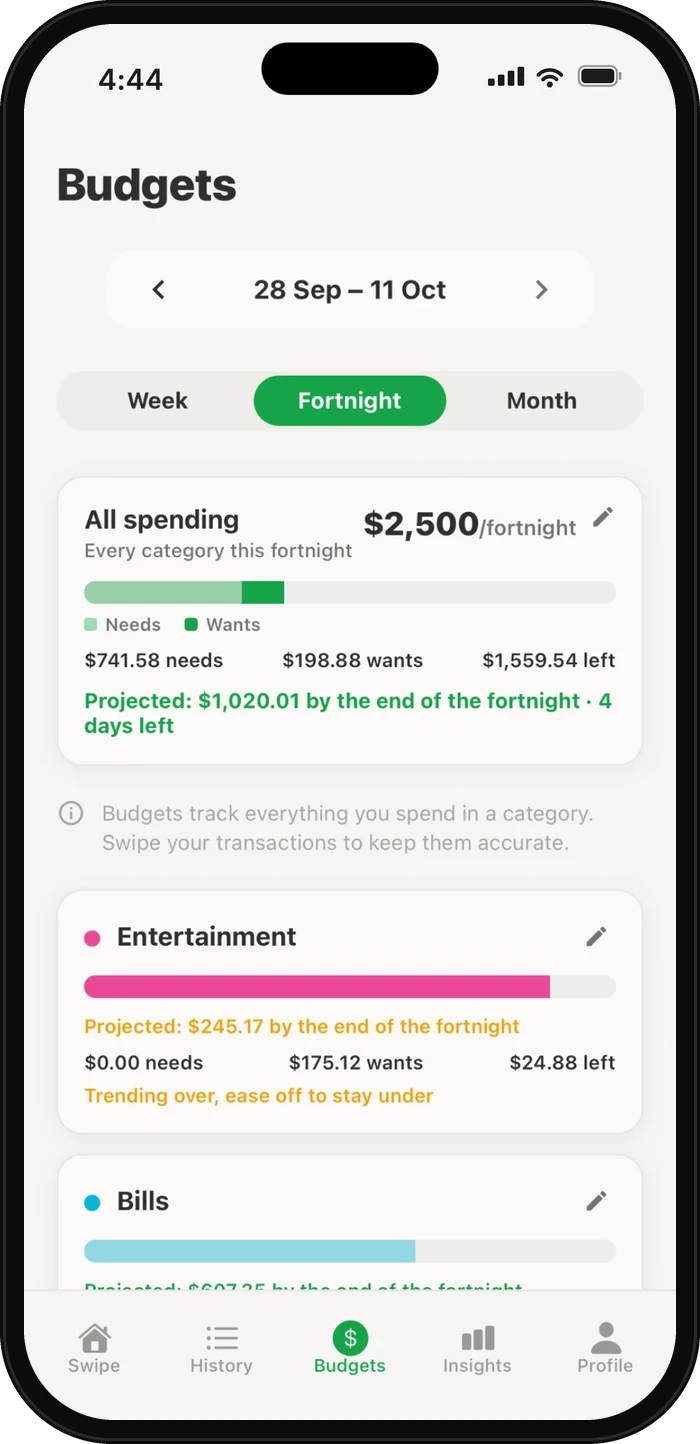
Christmas savings in five points
- List the whole of Christmas, not just the gifts.
- Pick the total first, then fit the list to it.
- Divide by the paydays left and set it aside each pay.
- Keep the money in a separate account.
- Start next year in January and it is far smaller per pay.
Keep reading
General information only. This guide does not take your personal situation into account and is not financial advice. For free, independent help, visit Moneysmart or call the National Debt Helpline on 1800 007 007.