
A need is spending you could not skip without something real going wrong for your home, health, job or safety. A want is everything else. Most purchases are easy to sort. For the tricky ones, a good rule is that the basic version is the need and the upgrade is the want.
What counts as a need?
Needs keep your life running. If you stopped paying for them tomorrow, you would feel it quickly. For most people in Australia that includes:
- Rent or mortgage repayments
- Groceries for meals at home
- Power, gas and water
- Getting to work or study: fuel, public transport, rego
- Insurance and health costs, including medicine
- A basic phone and internet plan
- Childcare and minimum repayments on any debts
What counts as a want?
Wants make life more enjoyable, but you could pause them without real harm. Eating out and takeaway, streaming services, new clothes beyond replacing what is worn out, hobbies, concerts, holidays and upgrades of any kind all sit here.
Wants are not bad. The aim is not to cut them all. It is to choose them on purpose, so they are spent on things you actually care about.
Three questions for the grey areas
When a purchase does not sort itself, ask:
- Would something real go wrong if I stopped this? Not "would I miss it", but would it affect my home, health, job or safety.
- Is there a basic version, and is this it? Groceries are a need. The fancy cheese is a want.
- Would I sign up again today? If you would not choose it again from scratch, it is a want you are paying for out of habit.
If two answers point to want, call it a want. You can always change your mind next week.
Common grey areas
| Spending | Usually a need when | Usually a want when |
|---|---|---|
| Phone | A plan you rely on for work and staying in touch | Extra data you never use or a new handset before the old one breaks |
| Car | You need it to get to work and transport does not reach | The upgrade, the bigger model or the extras |
| Clothes | Replacing worn-out work shoes or a winter coat | New styles when what you have still works |
| Lunch out | Rarely, since groceries cover the need | Most of the time |
| Gym | Part of a plan from your doctor or physio | A habit you enjoy but could pause |
| Streaming | Almost never | Almost always |
What about one shop with both?
A supermarket trip might be mostly groceries with a few treats. You do not need to split every receipt. Sort it by whichever part was bigger and move on. Being consistent matters far more than being exact.
Your line is personal
The same purchase can be a need for one person and a want for another. A car might be essential in a regional town and optional in the inner city. That is fine. Draw the line where it is honest for your life, then keep it in the same place so your numbers mean something over time.
Sort wants and needs with a swipe
Cleer imports your transactions and shows each one as a card. Swipe left for want, right for need. On Pro, Smart Rules remember the merchants you see every week so you are not asked twice.
Download free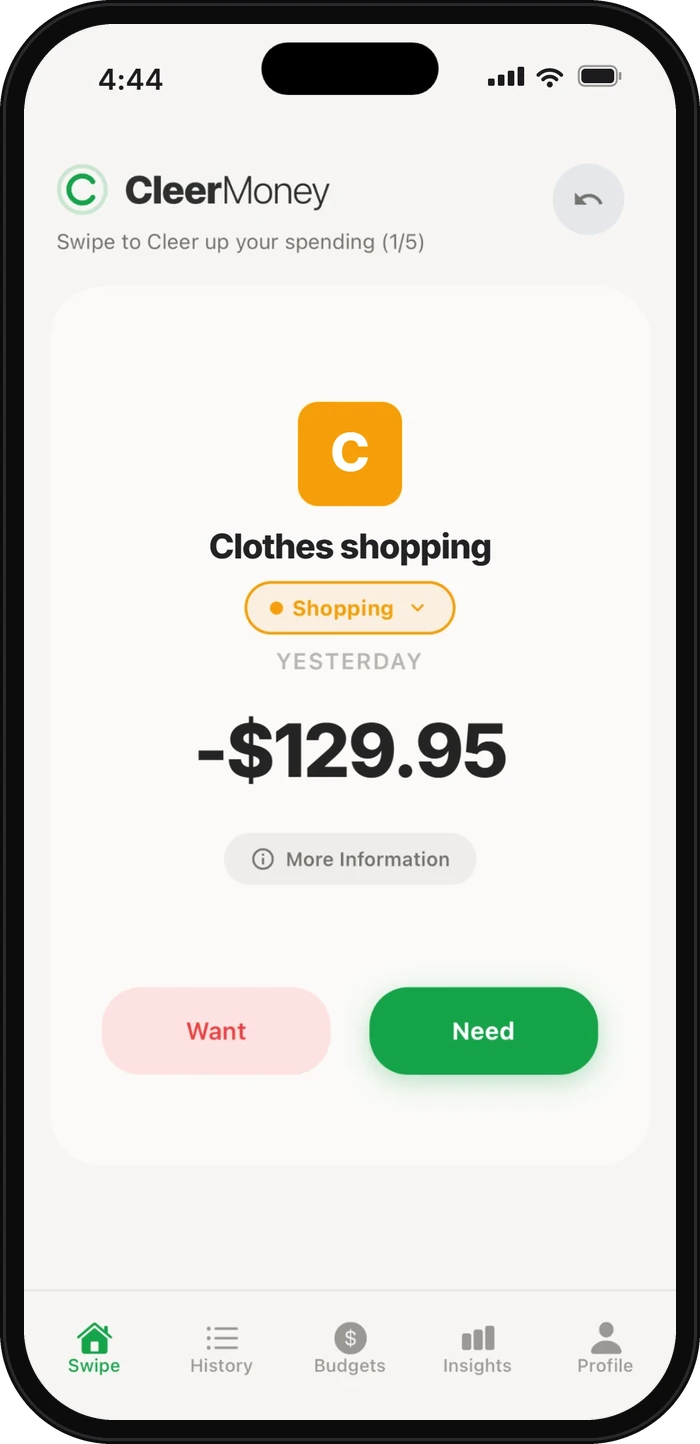
Needs vs wants in five points
- A need is spending you could not skip without real harm.
- The basic version is the need. The upgrade is the want.
- In a grey area, ask the three questions and go with the majority.
- For mixed shops, sort by the bigger part and move on.
- Your line is personal. Keep it consistent.
Keep reading
General information only. This guide does not take your personal situation into account and is not financial advice. For free, independent help, visit Moneysmart or call the National Debt Helpline on 1800 007 007.